
COMB COLLAPSE ALERT!!!

COMB COLLAPSE ALERTIf you’ve been researching natural beekeeping and top bar hives on the Internet, you have probably come across some websites that suggest that you paint beeswax on the points of your top bars, in an attempt to show the bees where you want them to build their wax combs. At first glance, this may seem like a good idea, but there are some serious drawbacks to doing this.

One concern is that melting the beeswax can be dangerous, but that’s not the worst of it.

The real problem with waxing the top bars is this: the wax that is painted on will never be attached as securely as if the bees had built it directly on the bar; and what may happen next is called a “comb collapse.” The bees build a full bar of comb, fill it up with brood and pollen and honey, and then suddenly, especially in the heat of summer, the entire comb collapses – falling off the top bar and down into the hive. This makes a huge mess, causing honey to leak throughout your hive, and it may also land on the queen when it falls, killing or injuring her, and leaving you with a queen-less hive.

To prevent these problems, we suggest that you use a top bar with a very good comb guide, and then simply let the bees draw their comb directly on that comb guide. There is no need to paint wax on the bars… just let the bees do their bee thing.

Initially, however, there was a second goal behind painting wax on the top bars. And that was to put the smell of beeswax into an empty top bar hive. A brand-new, empty top bar hive contains nothing to anchor the bees; nothing to make it smell like home. So having the smell of beeswax in the hive was an attempt to solve a problem occasionally experienced by new beekeepers known as “absconding” – an event where the bees abandon the hive and fly off.

But there’s a smell that works better than melted beeswax on the top bars to prevent absconding – and that smell comes from the pheromone found in brood comb. Brood pheromone is very attractive to bees. So today, we suggest that you use a “starter kit“- a kit made up of a small piece of brood comb and a wire to attach it to the top bar, along with a small dose of lemon grass essential oil, which emulates queen pheromone. These two smells are very strong attractants for your bees, and this does a much better job of convincing your bees to stay in the hive, and preventing them from absconding.

So please, I know you read it on the Internet – but don’t paint wax on your top bars.

Let the bees take care of that!
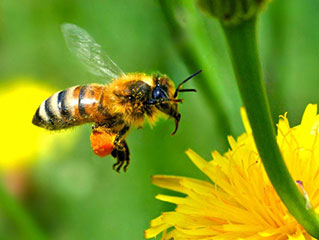
Beekeeping Vocabulary… Sorting out the jargon

Few industries use so many interchangeable terms to describe their equipment and methodology as beekeeping. For example – the individual boxes that make up a Langstroth hive stack may be referred to simply as supers, or they may be called deeps, mediums or shallows, an indication of their size. The beeswax comb that the bees build inside their nest might be called wax, or foundation, or comb, or brood comb, or honeycomb - similar terms and yet they mean different things. And how does one sort out the nuances of colony versus hive? Or frame versus top bar?

beekeeping jargonAdd into this mix the glowing terms that are commonly used to describe honey - such as pure, raw, natural and organic, and now there’s even more room for confusion. Organic is a regulated term with a specific legal definition, but pure, raw and natural are not. Organic honey is quite difficult to come by – since it requires that all the forage the bees visit and all the nectar and pollen they collect must be organic – and it’s nearly impossible to know that without having ownership of and control over many hundreds of acres of land. But the words natural, raw and pure, while they are lovely words, and conjure up beautiful visuals of glowing amber liquid, have no specific legal definition in the food industry.
This is why it’s important to be very specific when you are speaking, and to ask direct questions when you are listening – so that you are sure that the information being exchanged is accurate.

Another aspect of beekeeping where having a clear understanding of the terminology is becoming very important is when beekeepers are considering the purchase of bees for starting new hives. Depending on the protocol of the source apiary, the bees may have been treated with “heavy chemicals” – including antibiotics and miticides containing organophosphates and synthetic pyrethroids; with “soft chemicals” such as formic or oxalic acids; with nothing but essential oils or other not-toxic options; or - with absolutely nothing.

There are some terms coming into common use to categorize these protocols – including “chemical-free” and “treatment-free” - but just like in all other areas of beekeeping, these unregulated terms leave room for interpretation and confusion. So here again it’s important to ask questions to get the answers that you need. In The Thinking Beekeeper, I suggest that beekeepers can and should ask pointed questions about what treatments have been used in the apiary they are buying bees from. This is important to your own beekeeping – but it’s important on a different and deeper level as well… Because only by knowing this information can you help to support the apiaries that are working to shift the crucial paradigm - away from the use of toxic chemicals in beehives and agriculture, and toward methods that support the bees’ natural systems.

So… Ask the questions! Get the answers. You deserve to know.

Shipping Package Bees Through the Post Office

Anyone who has ever purchased a “three-pound package” of honeybees to be shipped through the United States Post Office knows that it can be a bit of a “you pays your money and you takes your chances” proposition.

post office beesThe US Postal System has a long history of shipping packaged bees through the mail. There are many anecdotes out there about the beekeeper receiving the harried 6am phone call from the local post office: “Your bees are here! PLEASE come down here and GET THEM! NOW, please!!!” It’s truly amazing how well it does work – putting three pounds of bees, a queen, and a can of sugar syrup feed into the hands of our mail system.

This spring, Gold Star Honeybees shipped nearly three hundred 3# packages of treatment-free, small-cell raised honeybees – the perfect bee for starting an all-natural-wax top bar hive, and for the most part things went beautifully. Many customers wrote us to report that there were so few dead bees on the bottom of the package that they could actually count them. In some cases, there were only a dozen casualties, maybe twenty. That’s a terrific success!

However, shipping bees through the post office doesn’t always go perfectly. Bees are easily affected by things that the post office cannot control – even though they live by the famous creed: Neither snow nor rain nor heat nor gloom of night shall stay these couriers from the swift completion of their appointed rounds.

So it’s ironic that weather is the biggest concern when shipping bees – too hot, and bees die; too cold, and bees die. Being left outside on the loading dock on a freezing night can mean the death of the entire package. Being locked up inside an area with no ventilation and too high a temperature can also kill a package of bees very easily.

This is one of the reasons that at Gold Star Honeybees, we do our best to manage these dangers. We try to ship only during times of the year when the weather is likely to support the safe arrival of the bees. Throughout the industry, a rule of thumb is that if the package arrives, and contains no more than one inch – (Yes, I said an inch!) – of dead bees on the bottom, that it is still a viable package. We work hard to do much better than that!

Another concern is about how long bees can survive inside the package they ship in. Given reasonable weather, bees are capable of surviving for up to 10 days - (Yes, I said 10 days!) - inside a package, as long as it is properly protected from the elements, and as long as they don’t run out of food. But really, like the bumper sticker on a pilot’s car might say, bees “would rather be flying!” So another thing we work hard to do is to limit the amount of time that the bees spend in transit. Bees are shipped quickly, via Priority Mail, and are insured. The customer’s phone number is included on the package label so that the post office can notify the beekeeper as soon as possible upon arrival.

Occasionally something dreadful happens and a package does not survive the shipping process. A package with all the bees lying in a heap on the bottom is a heart-wrenching sight, and we cry with the beekeeper every time this happens. Customers should be aware that when they go to pick up their bees, if there are more than an inch of bees lying dead on the bottom of the package – they should refuse the shipment, and immediately contact their supplier. Then if possible, arrangements can be made for a replacement to be shipped, or a refund to be made. It is then the task of the supplier to make a claim through the post office for insurance purposes.

All of this combines to make it possible for new beekeepers to get started with healthy, chemical free bees in natural top bar hives. With careful management, we can minimize the risk and see plenty of new beekeepers starting healthy hives with healthy bees. A heartfelt thanks to the United States Postal Service for doing what they do so well!

Join our newsletter to get information about our package bees as soon as it posts!